

Owning a swimming pool is one of life’s great luxuries, but looking at the tangle of pipes, valves, and equipment can feel like you’re trying to decode a secret message. It’s easy to feel overwhelmed, but here’s a little secret: your pool’s plumbing isn’t nearly as complicated as it looks. Understanding the basics of your pool’s circulation system changes everything. It helps you handle minor maintenance, fix problems, and talk confidently with pool professionals. Knowing your way around these components can also save you money on upkeep, which can range from $1,000 to $4,000 annually. This guide is your friendly, no-jargon-allowed explainer for all things related to pool fittings and plumbing.
Kicking Things Off: Why Pool Plumbing Isn't as Scary as it Looks!
The network of pipes connected to your pool pump and filter is the unsung hero of your backyard oasis. It's the circulatory system that keeps your water clean, clear, and inviting. Let's break it down.
Ever Stared at Your Pool Equipment and Felt a Little Lost?
You're not alone. Most pool owners see a collection of white pipes and mysterious handles and just hope for the best. This feeling of confusion is common, but it's also easy to overcome. The entire system is built on a few simple principles and a handful of key parts. Once you know what they are and what they do, the whole setup will start to make perfect sense.
What We'll Cover: Demystifying Your Pool's Hoses and Connectors
We're going to take a tour of your pool's entire plumbing system, piece by piece. We'll start with the big picture of how water moves, then dive into the different types of PVC pipes that form the foundation. After that, we’ll decode all those different PVC Pool Fittings and the valves that control everything. By the end, you'll understand how each part contributes to a healthy swimming pool.
Getting Comfortable with the Basics: It's Easier Than You Think!
Forget complex diagrams and technical manuals. Think of this as a conversation. We will use simple analogies to explain how everything works together. The pool pump acts as the heart of the system. The various connectors act as its arteries and joints. You've got this.
The Grand Tour: How Your Pool's Water Actually Moves
Before we get into the nuts and bolts, let's look at the journey your pool water takes every day. It’s a continuous loop designed to keep your water filtered, treated, and heated.
Picture This: Your Swimming Pool's Circulation System
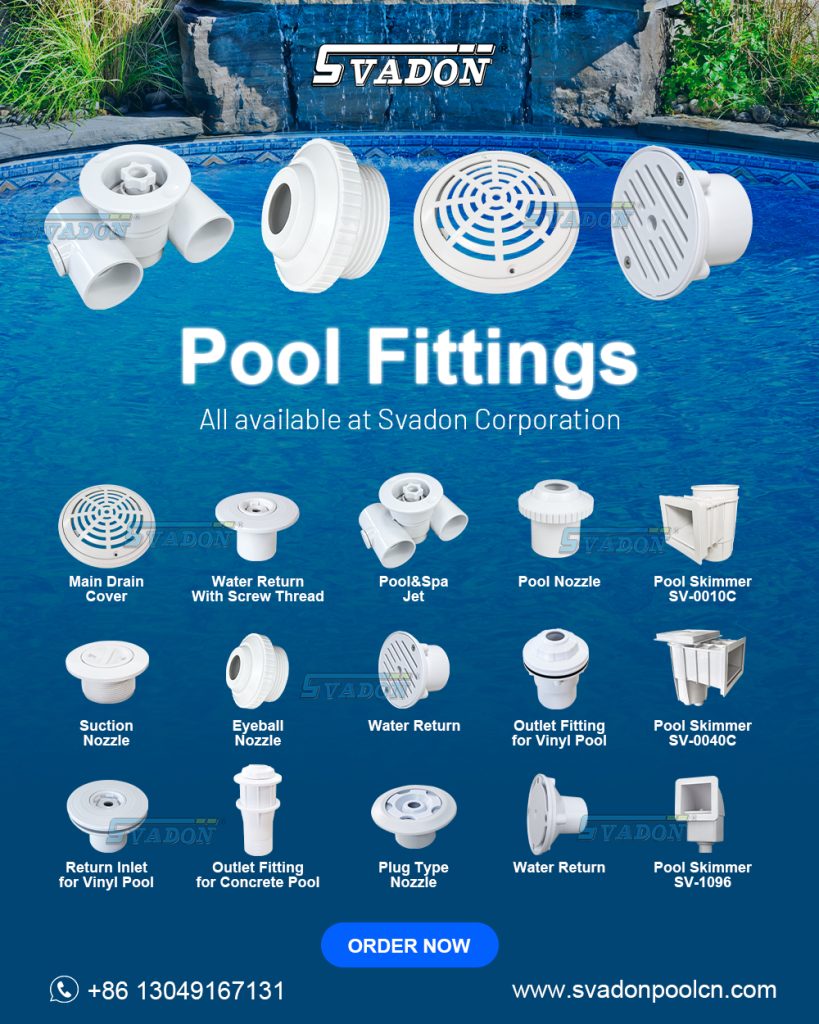
Water is pulled from the pool through skimmers (the boxes on the side) and main drains (at the bottom). This "suction side" plumbing carries the water to the pool pump. The pump pushes water under pressure through the "pressure side" plumbing. First, the water goes into the pool filter. Then, it may pass through Pool Heaters or chlorinators. Finally, the water returns to the pool through the return jets.
The Key Players: Pump, Filter, Heater (and the Pipes in Between!)
The main stars of your equipment pad are the pump, filter, and heater. The pump provides the muscle, the filter does the cleaning, and the heater adds the warmth. But the pool Fittings & Plumbing are what connect them all, creating a cohesive and efficient filtration system. Without the right pipes and connectors, these expensive pieces of equipment are just standalone boxes.
Why All These Pipes and Fittings Matter (Hint: Clean, Warm Water!)
Proper Pool Fittings & Plumbing ensure smooth, unrestricted water flow. This allows your pump to run efficiently without strain, your filter to capture debris effectively, and your heater to warm the water evenly. Leaks or poorly designed plumbing can lead to costly repairs; finding a leak can cost anywhere from $100 to $1,000 on average, making a solid initial setup crucial.
Meet Your Pool's Backbone: The Mighty PVC Pipes
The vast majority of pool plumbing is constructed from a specific type of plastic pipe. It’s the rigid, white tubing you see connecting everything, and it’s chosen for very good reasons.
What Exactly is PVC? (A Quick & Simple Intro to Polyvinyl Chloride)
PVC stands for polyvinyl chloride, a durable and affordable thermoplastic. It's the undisputed champion for pool plumbing because it's strong, lightweight, easy to work with, and, most importantly, highly resistant to the chemicals like chlorine used in pools. It won’t corrode or rust like metal pipes would.
Not All PVC is Created Equal: Understanding "Schedule 40" vs. "Schedule 80"
You'll often see "Schedule 40" or "Schedule 80" printed on PVC pipes. This "schedule" number refers to the thickness of the pipe's wall.
- Schedule 40 PVC Pipe: This is the most common type used for residential pools. It has a thinner wall but is more than strong enough to handle the pressure in a typical pool system. It's the standard for both suction and return lines.
- Schedule 80 PVC Pipe: This pipe has a thicker wall, making it much stronger and able to handle higher pressures. It's typically gray instead of white. While overkill for most residential lines, it's sometimes used in high-pressure situations or for commercial applications.
Getting the Right Fit: A Word on Pipe Sizes and Outside Diameter
Pool plumbing pipes typically come in standard sizes like 1.5" and 2". It’s crucial that the pipe and fittings match. While the label says 1.5", this refers to the inside diameter; the outside diameter is what determines the fit with the fittings. Mismatched sizes will either not fit or create a weak, leak-prone connection.
The Connectors & Creators: Essential Pool Fittings Decoded
If pipes are the bones of your plumbing system, fittings are the joints. They allow you to connect pipes, change direction, and branch off to different pieces of equipment.
Why Do We Need So Many Different Shapes? (They're Your Water's GPS!)
Each fitting has a specific job. They are the GPS for your water, directing it precisely where it needs to go. This network ensures water gets from the skimmer to the pump, through the filter, and back to the pool in the most efficient way possible, navigating around corners and obstacles.
The Straight Shooters: Joining Pipes End-to-End
The simplest fitting is a coupling (or socket). It's a small, straight piece that allows you to join two pieces of PVC pipe in a straight line. They are essential for creating long, continuous runs of pipe.
The Benders: Guiding Water Around Corners (Smoothly!)
Elbows are used to change the direction of the water flow. They come in two main angles: 90 degrees for sharp turns and 45 degrees for more gradual bends. Using smooth, sweeping elbows instead of sharp 90-degree ones can improve flow efficiency and reduce strain on your pump.
The Splitters & Combiners: Directing Water Traffic
Tee fittings are shaped like the letter "T." They allow you to split one line into two or combine two lines into one. You'll often see them used to connect multiple suction lines (like a skimmer and a main drain) before they enter the pump.
The Threaded Guys: Screwing Things Together (Properly!)
Many pieces of pool equipment, like the pump and filter, have threaded ports. To connect a pipe to them, you need an adapter fitting. A common type has a smooth socket on one end for the pipe and a Male Pipe Thread (MPT) on the other that screws into the equipment.
A Quick Note on Other Fittings (And Which Ones Aren't for Pools!)
You might see other special fittings like unions. Unions let you easily disconnect equipment for servicing. You might also see bushings. Bushings connect a larger pipe to a smaller one. It's also important to know what not to use. PVC DWV Pipe (Drain, Waste, Vent) looks similar but not designed to handle pressure and should never used for pool plumbing. CPVC Pipe works well for hot water lines inside a house. It is usually not needed for standard pool plumbing. You only need it if you connect directly to a heater output. A transition fitting may required in such cases.
The Traffic Cops: Valves That Control Your Pool's Water Flow
Valves are the gates and traffic directors of your plumbing system. They give you manual control over where the water goes, allowing you to perform maintenance and operate different features.
Why Valves Are Your Best Friends for Pool Maintenance and Operation
Valves are essential. They allow you to isolate pieces of equipment (like the pump or filter) for repair without draining the whole system. They also let you adjust the flow between the skimmer and the main drain or divert water to features like a waterfall or an attached spa.
The Simple On/Off Switch: Ball Valves
The most common valve in pool plumbing is the ball valve. A simple quarter-turn of the handle opens or closes the valve completely. They are reliable and easy to use for shutting off a line completely.
The One-Way Street: Check Valves (Keeping Water Flowing in the Right Direction!)
A PVC check valve is a critical safety feature. It acts like a one-way door, allowing water to flow in only one direction. This stops water from flowing backward out of the filter and heater when the pump is off. This is very important if your equipment is below the pool's water level.
The Diversion Specialist: 3-Way Valves (For Those Multi-Tasking Systems like Solar Heaters)
A 3-way valve is a multi-tasker. It has one inlet and two outlets (or vice-versa) and a handle that allows you to divert flow from one path to another, or even blend the flow between the two. These are commonly used for solar heating systems, waterfalls, or spa jets.
A Word on Drain Valves (Usually Smaller, for Emptying Specific Sections Safely)
You will often find small drain plugs or valves on your pump, filter, and heater. These aren't for controlling circulation but used to drain the water out of the equipment for winterizing or major repairs, preventing freeze damage.
Making It Stick: Glues, Cleaners & Repair Essentials
Connecting PVC pipes and fittings isn't about brute force; it's a chemical process that creates a permanent, watertight bond.
The Secret to a Watertight Seal: Proper PVC Primer and Adhesive
To join PVC, you need two things: a primer (usually purple) and a PVC solvent cement or PVC adhesive. The PVC cleaners or primers are crucial—they clean the surfaces and soften the plastic. The solvent cement then chemically welds the two pieces together, creating a seamless, leak-proof joint. Skipping the primer step is a common cause of slow leaks down the road.
When Things Go Wrong: Handy Repair Kits for Quick Fixes
Even with a well-built system, accidents happen. A stray rock from a lawnmower or a shifting ground can cause a crack. Thankfully, various Repair Kits are available. They include epoxy putties or fiberglass patches designed for underwater use. These kits allow quick fixes without draining the pool or cutting out whole pipe sections. These are essential Pool Supplies for any prepared pool owner, especially considering that the broader swimming pool market is projected to grow by $7.28 billion by 2029.
Understanding Plumbing Pool Fittings Essentials
And there you have it—your easy explainer for the world of Plumbing Pool Fittings. That complex web of pipes behind your swimming pool is no longer a mystery. You now know the system uses durable PVC pipe. The pipes connect with a set of well-designed PVC Fittings. A few essential valves control the system. You can tell the difference between Schedule 40 and Schedule 80. Can know why a PVC check valve is important. You also understand that using the right PVC adhesive is key to preventing leaks.
This knowledge empowers you. The next time you need to backwash your filter, adjust the suction for your Pool Cleaner, or discuss a repair with a technician, you'll do so with confidence. Major plumbing work is best done by professionals. However, knowing these basics helps you maintain your pool better. It also helps you spot problems early. This keeps your pool a source of joy, not stress, for years.